
Upland plants can produce troves, and certain plants can even produces troves that can be exchanged for STEM. How frequently it produces a trove is a a function of many factors. With different types of plants, you have the ability to obtain a variety of different troves. This factors into you fulfilling trove recipes to mint an Uppie. Farming introduces scale and takes the concept of trove production and expands it into something much more consistent and much higher output. Farming is dedicated to STEM-bearing production.
Farms will allow players to plant and manage large-scale production of STEM-bearing crops and orchards such as wheat, corn, apples, and grapes. Instead of relying on chance interactions across scattered properties, farming creates a more structured and reliable way to generate STEM-bearing troves at volume. This makes farming one of the most effective ways for players to consistently generate STEM through gameplay.
Farms are not properties that generate UPX earnings. They are special neighborhoods in a city. Farms are designated with a brown property color, and can only be used for farming.
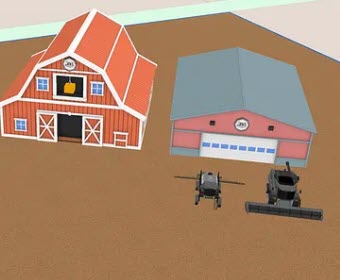
This creates a distinct role within the ecosystem. Players who who plant and need to feed maybe hundreds or thousands of plants may choose to focus on farming as a primary way to generate STEM-bearing troves, optimizing for efficiency and output over time. This will enable them to feed their plants without having to purchase STEM from the Upland store.
At the same time, farming does not replace other forms of play. Residential properties, decorative builds, and other systems will continue to generate a wide variety of troves that are required for recipes. Farming simply becomes an effective way to scale one specific part of the system.
Learn about the different types of farming structures that can help to boost your farming abilities.