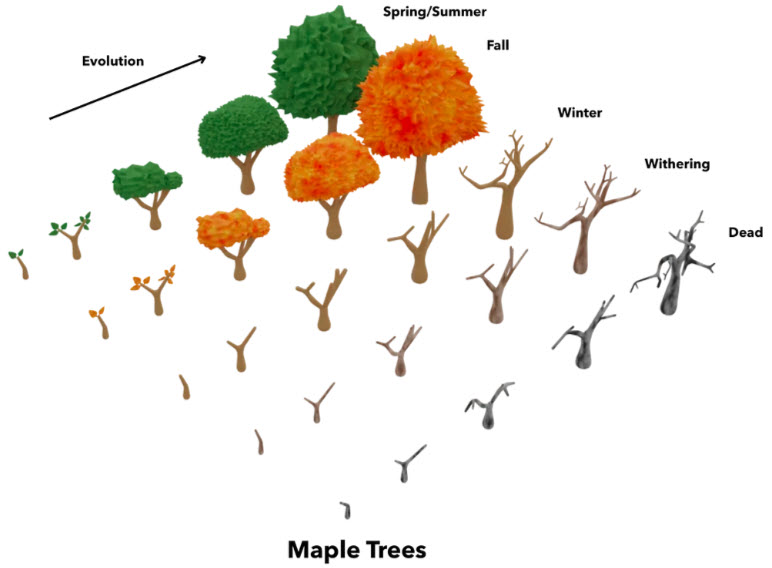
Plants are the first life form that exist in the Upland Metaverse, and help to bring your virtual land to life through feeding and cultivation. Ornamental plants come in the form of flowers, shrubs, trees, grass and sod, but the variety will grow over time as the Life system expands. All of the different seeds and plants are organized in the Upland Guide Plant Database.
To plant a plant, you will have to burn a seed Legit which can be generated, bought and sold in nursery metaventures (grass and sod can be bought directly from the Upland store). Once planted, plants become permanently linked to the property, they’re not NFTs and cannot be transferred independently. Ownership of the plant is tied to the property itself, meaning whoever owns the property, owns the plant. Plants will need to be fed and cultivated, and those that are not will end up dying. To ensure your plants have a “thriving” health status you will need to care for them and maintain their health and wellbeing.
Feeding your plant will require you to spend Stem. This will be done through your main profile, and you can feed all your plants at once. Feeding your plants will maintain their health.
Maintaining your plant’s wellbeing will require you to directly interact with it by clicking it. This task can be completed by any player, building in new opportunities for collaboration and community connection. This can also result in you earning a trove that will help you to mint Uppies. Players can automate the petting, and even the collection of troves on a property by assigning an Uppie to it.
Here is a more detailed explanation about health and wellbeing. Plants take time to grow and they even change appearances over time to reflect the different seasons in the year. You can choose to fast track the plant’s growth by use of miracle growth, by paying some UPX.
See all different plants and other important details regarding them in Upland Guide Plant Database. To understand all the costs of gardening, utilize the Upland Guide Gardening Calculator.